First flight of the Su-57 with the izdeliye 177 engine, the “missing link” between the AL-41F1 and the Izdeliye 30
The maiden flight of the izdeliye 177 confirms Russia’s progress toward a high‑power intermediate solution for the Su-57, with a direct impact on exports, re‑engining, and future programs such as the Su-75.
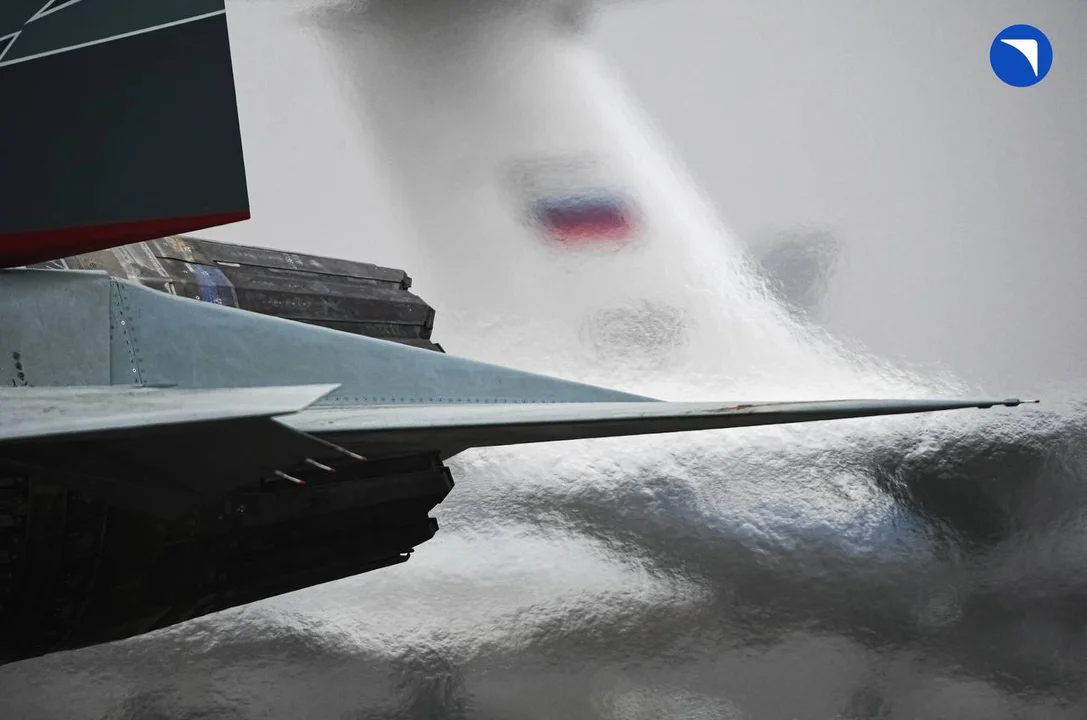
The first flight of a Su-57 equipped with the new “izdeliye 177” engine marks a relevant milestone within the long and complex maturation process of Russia’s stealth fighter program. Announced by Rostec and carried out through cooperation between United Aircraft Corporation (UAC) and United Engine Corporation (UEC), the event represents the formal start of flight testing for a new fifth-generation powerplant—still far from validating a fully operational or serial-production-ready engine.

Beyond the AL-41F1, but before the Izdeliye 30
Few would dispute that Russian engine nomenclature can be confusing. However, this flight makes it possible to draw a clear three-stage evolutionary path for the Felon:
- Stage 1: the present (Izdeliye 117 / AL-41F1) This is the engine with which the Su-57 entered service. While it shares its DNA with the AL-41F1S of the Su-35S, the 117 incorporates a more advanced FADEC control system. Delivering between 14,500 and 15,000 kgf of thrust, it has proven sufficient to meet baseline requirements, but remains limited when it comes to fully exploiting the aircraft’s supercruise potential and combat persistence.
- Stage 1.5: the new development (Izdeliye 177) This is the engine that flew yesterday. It represents a step up to roughly 16,000 kgf of thrust. It is a deeply refined evolution of the AL-41F1 architecture, improving the thrust-to-weight ratio. While its 177S variant—shown at airshows such as Aero India—is marketed at 14,500 kgf as a drop-in replacement for the AL-31FP powering the Su-30MKI, the “clean” 177 version is the high-power standard optimized for near-term Su-57 production batches and its export variant, the Su-57E.
- Stage 2: the objective (Izdeliye 30 / AL-51F1) The definitive fifth-generation engine. It is intended to deliver up to 19,000 kgf of thrust and to feature new flat, two-dimensional nozzles designed to drastically reduce rear-aspect radar and infrared signatures. This engine continues along its own pre-series testing timeline.
Potential operational and commercial impact
The integration of the izdeliye 177 should not be read merely as an incremental performance upgrade for the Su-57. Its systemic impact on several key Russian combat aviation programs—both operationally and commercially—should not be underestimated.
First, the new engine strengthens the viability of the “Super Sukhoi” program offered to India as the core of the Su-30MKI mid-life upgrade. The 177S variant, conceived as a direct replacement for the AL-31FP without major structural modifications, would allow New Delhi to access a significant increase in thrust, efficiency, and service life, while partially unifying logistics with the Su-57 ecosystem. By demonstrating that the engine’s technological core is already flying on a fifth-generation platform, Moscow seeks to rebuild industrial credibility after years of delays that eroded Indian confidence and ultimately led to its withdrawal from the FGFA program.
Within that same framework, the izdeliye 177 becomes a central element of Russia’s effort to reopen the Indian market to the Su-57E. Beyond the airframe itself, propulsion has always been one of the Felon’s most questioned aspects. Having a more powerful, more efficient engine—one that also has the potential to power the Su-30MKI—is essential to positioning the Su-57 as a viable alternative to Western options or indigenous developments such as the AMCA.
The potential impact also extends to other Su-30 family operators, including Algeria, Vietnam, Malaysia, and others with large fleets and service horizons stretching well into the 2030s. For these countries, a re-engining solution based on the 177S offers an intermediate path between deep modernization and the acquisition of an entirely new fighter, improving kinematic performance while reducing operating costs without altering the aircraft’s basic architecture.
Finally, the izdeliye 177 is a key enabler for the future commercial prospects of the Su-75 Checkmate. Designed from the outset to share critical components with the Su-57, Russia’s single-engine fighter depends on the availability of a compact, powerful, and reliable powerplant to sustain its cost and performance claims. Without an engine of this class validated in flight, the Su-75 would remain little more than a concept. With the 177—at least from a propulsion standpoint—the project gains a more tangible foundation, though it is still far from translating into firm contracts.

In short, the Su-57’s flight with the izdeliye 177 does not, by itself, alter the global technological balance. It does, however, introduce a new variable into Russia’s strategic equation: an engine that, if successfully consolidated, could serve as a bridge between legacy fourth-generation fleets, the Su-57, and future programs—reshaping both export offerings and Moscow’s industrial narrative in an increasingly restrictive competitive environment.