Germany approves €50 billion for modernization and arms procurement, focusing on air defense, ISR, drones, and space
The Bundestag cleared a record defense package strengthening air and missile defense, ISR capabilities, unmanned systems, and military space assets.
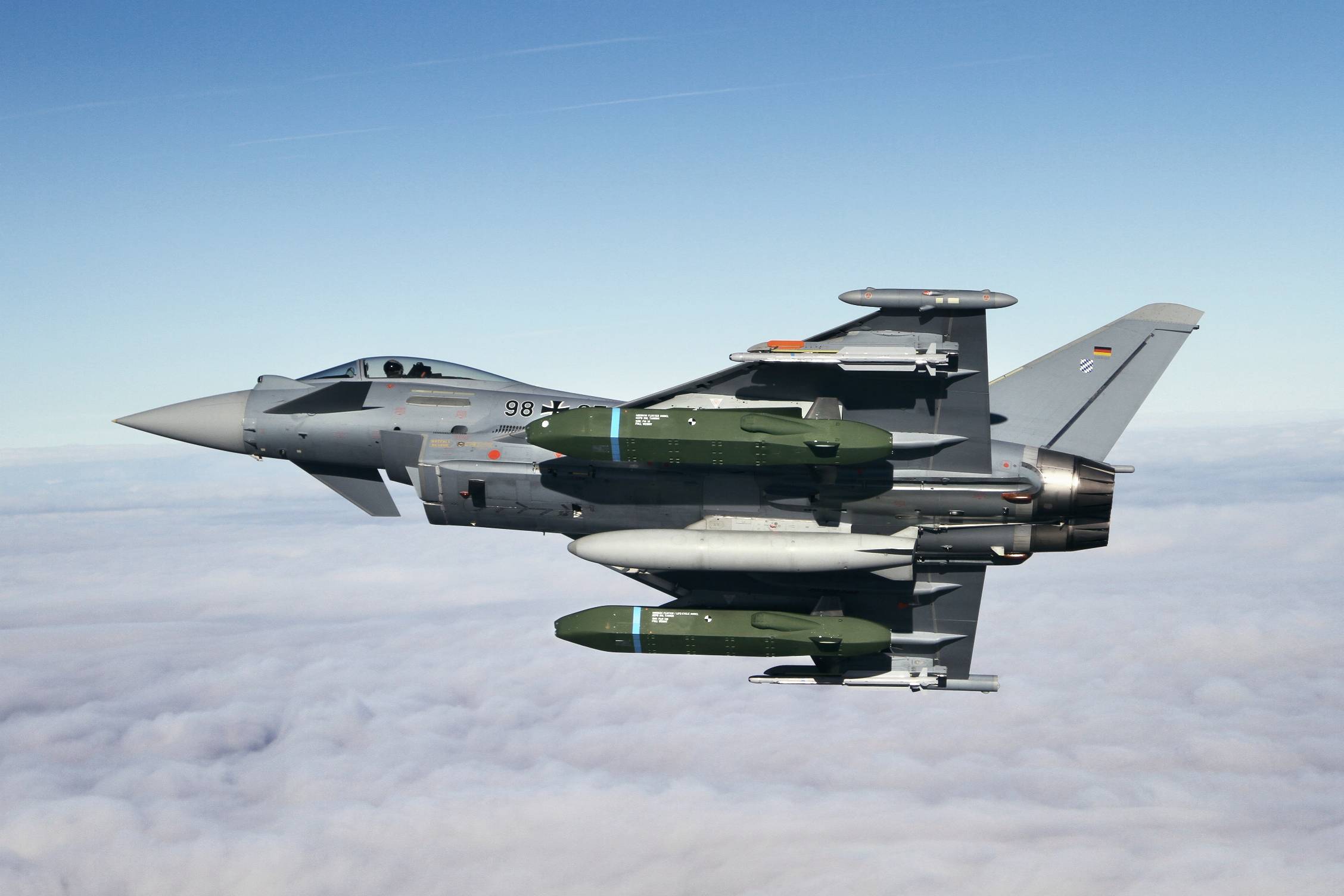
In a historic session consolidating the strategic pivot (Zeitenwende) initiated by Chancellor Friedrich Merz’s administration, the Bundestag’s Budget Committee has greenlit a military procurement package exceeding €50 billion. Under the premise that “democracies must be better armed than autocracies”, the federal government has prioritized air superiority, multi-layered missile defense, and tactical intelligence capabilities from space.
This expenditure—part of a record-breaking year with total projected investments of €82.98 billion—marks a milestone in the modernization of the Luftwaffe and the joint capabilities of the Bundeswehr.
1.Integrated Multi-Layered Air Defense
The absolute priority of this budget focuses on Integrated Air and Missile Defense (IAMD) architecture. Germany seeks to close vulnerability gaps against hypersonic and saturation threats:
- Upper Tiers (Exoatmospheric): A substantial increase in the Arrow-3 system contract has been approved. The rise in the number of launch units and interceptor missiles reinforces the capability to intercept ballistic threats outside the atmosphere—a pillar of the European Sky Shield Initiative (ESSI).
- High and Medium Altitude: The IRIS-T SLM system receives an allocation of €1.3 billion for additional missiles and batteries, consolidating its operational success following lessons learned in the Ukrainian theater. Furthermore, €1.55 billion is earmarked for the modernization and expansion of the Patriot system, including the procurement of PAC-3 MSE (Missile Segment Enhancement) missiles and the conversion of launchers to operate this high-lethality variant.
2. Air Superiority and Precision Lethality
The Eurofighter Typhoon remains the backbone of German combat aviation, receiving critical mission system upgrades:
- AESA Radar (E-Scan): Procurement was authorized for new hardware components for the ECRS Mk1 active electronically scanned array radar. Developed in cooperation with Spain, it ensures enhanced resistance to electronic countermeasures (ECM).
- Stand-off Weaponry: One of the most significant announcements is the pre-series phase of the TAURUS NEO. This evolution of the Taurus KEPD 350 cruise missile seeks to enhance long-range precision strike capabilities in Anti-Access/Area Denial (A2/AD) environments. It incorporates AI, reduces reliance on satellite navigation (GNSS), and substantially increases both range and low-observability (stealth).
- Air-to-Air Combat: The fourth batch of Meteor missiles has been confirmed, securing Beyond Visual Range (BVR) dominance thanks to its ramjet propulsion.
3. Space Domain and ISR Surveillance
The Bundeswehr recognizes space as a critical operational domain. The SPOCK (Space System for Persistent Operational Tracking) project has been awarded €1.76 billion. This tactical radar satellite constellation will provide persistent surveillance, essential for supporting ground units—such as the armored brigade deployed in Lithuania—regardless of weather or light conditions.
In the airborne sector, the PEGASUS (Persistent German Airborne Surveillance System) program receives new funding for its signals intelligence (SIGINT) platforms. Simultaneously, naval aviation integrates the unmanned component of MAWS (Maritime Airborne Warfare System) and eight MQ-9B SeaGuardian UAVs for anti-submarine warfare (ASW) and maritime patrol missions.
4. Drone Warfare
In response to the surge of UAV incidents near critical infrastructure, Interior Minister Alexander Dobrindt inaugurated the Joint Drone Defense Center (GDAZ) in Berlin. This center will coordinate civil and military responses to hybrid threats.
To support this doctrine, the FALKE system has been approved. This is a fixed-wing eVTOL tactical reconnaissance drone based on the Quantum Systems Vector. Capable of vertical takeoff and landing, it is designed to provide surface units with immediate "elevated vision" on the modern battlefield.
Germany Seeks to Lead European Defense
With these investments, Germany not only aims to meet the NATO 2% GDP spending target but also intends to send an unequivocal signal to both partners and potential adversaries: Germany is assuming a more active and sustained role in the European security architecture.
This transition toward a force with genuine deterrent capability aligns with the objective set by Defense Minister Boris Pistorius to make the Bundeswehr "fit for war" (kriegstüchtig). This paradigm shift is defined by the administration as the essential foundation for guaranteeing peace and stability on the continent in the face of emerging systemic threats.


